How to Fold a Suit for Travel: Jacket and Trousers
Fold a suit jacket and trousers so they arrive ready to hang, not ready to press: the shoulder tuck, the trouser crease and the packing order.
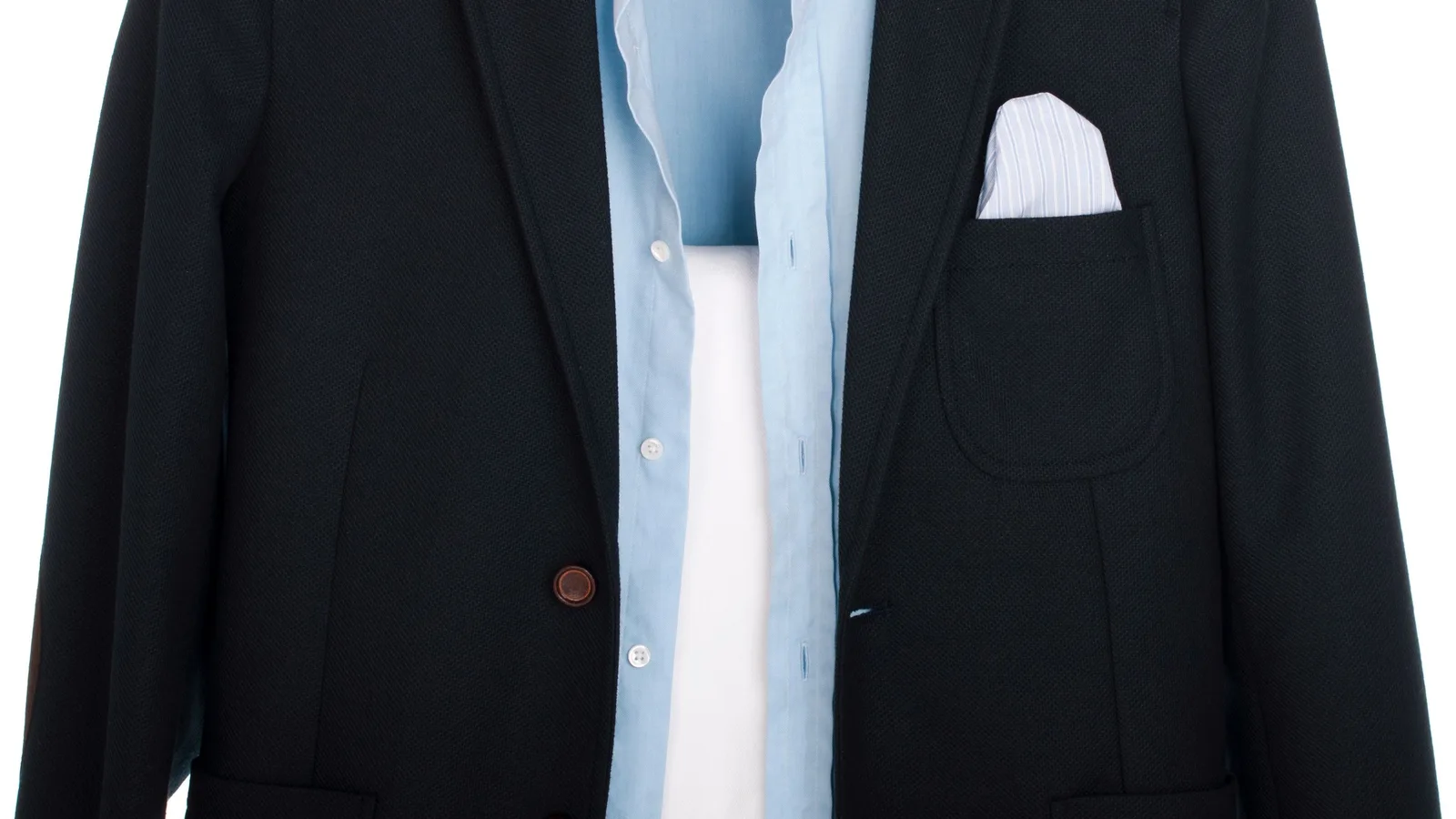
The short answer
Folding a suit properly takes about ten minutes and one flat surface. Fold the jacket into itself so the two shoulders nest inside one another, fold the trousers along the crease they already have, then pack the two together with every fold sitting at the hinge end of the case rather than in the middle.
A two-piece suit packed this way takes up roughly the space of a week's shirts. More importantly, it arrives ready to hang rather than ready to press — which matters if your first formal night is the evening after you board.
What you need before you start
- A flat surface at least as wide as the jacket laid out with its sleeves out — a bed or a dining table, not the floor.
- A few sheets of acid-free tissue paper, or two dry-cleaning bags, to soften the folds at the shoulders.
- A case with a reasonably flat lid. A soft holdall works, but only if you fill it properly so the suit cannot slump.
- Empty pockets. Clear everything out first: keys, pens and coins leave bulges that press into the cloth, and a forgotten boarding pass in a jacket pocket is a nuisance at security.
- Ten uninterrupted minutes, ideally the evening before you leave rather than a bleary-eyed hour before the taxi.
Step by step: folding the jacket
-
Empty the pockets and do up the middle button
Turn every pocket out and shake out the lining. Fasten the middle button so the front panels stay aligned and the jacket keeps its shape while you handle it.
-
Lay it face down on the flat surface
Back facing you, sleeves out to the sides, collar pointing away. Smooth the back and the lining flat with your palms so there are no rucks before you start folding.
-
Tuck one shoulder into the other
Put your hand inside one shoulder and push it back so it turns inside out and slides into the opposite shoulder. The two shoulders nest together and the jacket becomes roughly half its width. If that feels awkward the first time, fold one shoulder straight back behind the other instead — the aim is simply that no padding is folded hard against padding.
-
Bring the sleeves down the back
Straighten each sleeve so it lies alongside the body of the jacket rather than bunched at the elbow. A sleeve folded over on itself creates a crease along the arm that shows the moment you put the jacket on.
-
Fold the jacket in half lengthways
Bring the two sides together so the sleeves sit flat against the back and the lapels end up tucked inside, protected. Slide a sheet of tissue paper between the lapels and the jacket if you have it.
-
Fold again to fit the case
Fold hem up to collar, in half or in thirds depending on how deep your case is. Slip a sheet of tissue at each shoulder fold before you make the last fold — it turns a sharp edge into a soft curve and is the single most effective thing you can do.
Step by step: folding the trousers
-
Empty, shake out and match the legs
Line the two legs up so the pressed front creases sit exactly on top of each other. Any offset here becomes a second, unwanted crease.
-
Fold in half lengthways, along the crease
Waistband to hem, crease to crease. You are folding where the fabric is already pressed, so the fold follows an existing line rather than creating a new one.
-
Fold again to fit the length of the case
Fold in two or three, and always in the same direction as the crease. If the trousers are longer than the case, make the second fold parallel to the first — never across the legs, or you get a horizontal band across the shin.
-
Or roll them, if the fabric allows
For soft cotton or a casual suit, roll from the hem upwards around a rolled belt or a pair of socks. Rolling suits casual trousers and backpacks well; it is a poor choice for a sharply pressed worsted wool suit.
Step by step: packing the case
-
Start with the heavy things at the wheel end
Shoes, wash bag, books — anything dense goes at the end of the case that will be at the bottom when it stands upright. That way the suit is never carrying the weight of everything else.
-
Lay the trousers in first, waistband overhanging
Put the folded trousers into the case with the waistband end hanging out over the edge by a few inches.
-
Lay the folded jacket on top
Centre it over the trousers with the folded lapels facing up, so nothing presses down on the front of the jacket.
-
Fold the overhanging trousers back over the jacket
The trousers now wrap the jacket rather than being crushed beneath it, and the fold in the trousers sits at the edge of the case where there is room to curve.
-
Fill the gaps so nothing moves
Tuck socks, rolled t-shirts or a pouch down the sides. A suit that can slide around in the case creases far more than one held gently in place. Nothing heavy goes on top of it.
-
Use the lid if the case opens like a book
A suit packed in the lid side stays on top when the case is upright, which is exactly where you want it.
Choosing a method for your trip
| Method | Best for | Crease risk | Space used |
|---|---|---|---|
| Full fold in a suitcase | One suit, a medium or large case, a fixed base | Low, if you use tissue at the shoulders | Moderate |
| Rolling | Soft cotton or casual suits, backpacks and holdalls | Moderate — soft fabrics take curved creases | Lowest |
| Bundle wrapping | Longer trips with mixed clothing in a hard case | Low, once you have practised it | Fills most of the case |
| Tri-fold garment bag | Fly-cruise with one checked bag and formal nights | Lowest of the four | Highest — a dedicated bag |
Which suits fold best
- Worsted wool
- Springs back best. Creases relax overnight on a hanger, given a little room and air.
- Cotton and cotton blends
- Holds a press well but takes a sharp edge at folds. Steam helps more than ironing.
- Linen
- Creases on contact with anything. Pack it only if you have accepted the rumpled look.
- Silk and silk blends
- Marks easily. Keep away from rough fabrics, Velcro, zips and anything damp.
A structured jacket with canvas in the chest folds and recovers better than an unstructured, unlined one, which tends to collapse into whatever shape the case dictates. If you only own one suit and it is unstructured, plan on hanging it for a full day before you need it.
What commonly goes wrong
- Overpacking. A case that needs a knee on it to close is pressing the suit flat. If you have to force it, something has to come out.
- Folding the trousers across the leg. This is the classic mistake, and it leaves a horizontal band across the shin that no shower steam will shift.
- Folding the jacket flat. Shoulders folded against shoulders press hard creases into the canvas, which is far harder to fix than a crease in the cloth.
- Leaving the suit folded after arrival. A suit that sits in the case for two days in a warm cabin sets into its folds. Unpack it before you unpack anything else.
- Packing a damp suit. Anything worn on a sweaty journey, or rained on, needs to air and dry completely before it goes in the case — otherwise it arrives smelling of a suitcase.
On arrival: getting the creases out
-
Unpack and hang it immediately
Jacket on a broad, shaped hanger that fills the shoulders — a thin wire hanger from the wardrobe will undo the shape you just protected. Trousers either clipped by the cuffs and hung full length, or folded over the bar of the hanger.
-
Give it a steamy bathroom
Run a hot shower, close the door and hang the suit in the steam for fifteen to twenty minutes. The moisture relaxes the fibres and most travel creases drop out. Take it out afterwards — leaving it in a damp bathroom overnight does more harm than good.
-
Let it hang for a day
Give the suit twenty-four hours of air in a ventilated cabin before you need to wear it, and brush it down with a clothes brush. Wool in particular keeps relaxing for hours after it comes out of the case.
-
Only then reach for an iron
If a crease survives all that, use the ship's pressing service rather than doing it yourself, or iron with a damp cloth between the iron and the cloth and keep the iron moving. Never press an iron directly onto a wool jacket — it leaves a shine that does not come out.
Common questions
Can I fold a suit into a carry-on bag?
Usually, yes. A jacket folded the way described here comes down to roughly the bulk of a folded jumper, and trousers take little more room than a pair of jeans. A soft holdall or a case with a flat lid works best; a rigid underseat case with a curved interior generally does not.
How far ahead should I fold the suit?
As late as you reasonably can. A suit folded the night before arrives with shallower folds than one that has been sitting in a case for a week, because the fibres have had less time to settle into the creases.
Does tissue paper really make a difference?
Yes, mainly at the shoulders and the lapels. It gives the fabric something rounded to fold over instead of a hard edge, and it stops the lapel pressing against the body of the jacket. Acid-free tissue is safest; a dry-cleaning bag works almost as well.
What do I do if the suit arrives badly creased?
Hang it in a steamy bathroom first, then leave it hanging overnight — that resolves most travel creases. If it does not, send it to the ship's pressing service rather than attempting it yourself with a travel iron on a cabin desk.
Should the suit go in the case or in a separate suit carrier?
If you have one checked bag and a formal night to dress for, a tri-fold suit carrier protects a suit better than any suitcase fold. If you are travelling carry-on only, fold it into the case — a separate carrier usually counts as a second bag.
Related articles

How to Find Cheap Cruises: A Practical UK Guide
Practical steps to find genuinely cheap cruises from the UK: when to book, which sailings and cabins cost least, and the extras that sink a bargain.
How to Organise a Trip: A Step-by-Step Planning Guide
Learn how to organise a trip step by step: set a realistic budget, check passports and entry rules, book in the right order and plan a manageable itinerary.
How to Pack for a Cruise: A Step-by-Step Guide
A step-by-step guide to packing for a cruise: what to check first, how to plan outfits around dress codes, and what to keep in your hand luggage.