The best places to visit in Japan: five picks worth your time
From Tokyo's neon energy to Kyoto's temples and Hiroshima's islands, here are the five best places to visit in Japan and who each one suits.
The best places to visit in Japan: the quick answer
If you have a week and it is your first visit, the answer is Tokyo and Kyoto: Tokyo for the sheer range of things to do, Kyoto for the Japan most people picture before they arrive. Add Osaka if food matters more to you than temples, Hiroshima if you want history and island scenery in one stop, and Kanazawa if you would rather trade crowds for gardens and craft.
Our five picks, in short:
- Tokyo — best overall: the easiest introduction and the best base for day trips.
- Kyoto — best for temples, gardens and old wooden streets.
- Osaka — best for eating, drinking and late nights.
- Hiroshima and Miyajima — best for pairing a difficult history with one of Japan's loveliest islands.
- Kanazawa — best for a slower, smaller city with a world-class garden.
All five sit on or near the shinkansen network, so combining two or three of them is straightforward. The harder decision is what to leave out.
How the five compare side by side
| Destination | Best for | Don't miss | Allow |
|---|---|---|---|
| Tokyo | City energy, food and day trips | Senso-ji and the Shinjuku skyline after dark | 3–5 nights |
| Kyoto | Temples, gardens and traditional streets | Fushimi Inari before 9am | 2–3 nights |
| Osaka | Eating, drinking and nightlife | Dotonbori in the evening | 2 nights |
| Hiroshima and Miyajima | History plus island scenery | The Miyajima torii at high tide | 2 nights |
| Kanazawa | Gardens and craft without the crowds | Kenroku-en garden | 1–2 nights |
The time estimates assume you are actually sightseeing rather than arriving and leaving on the same day. They are a guide to how long each place rewards, not a rule: Tokyo can absorb a fortnight, and Kanazawa can be seen properly in a day and a half if you start early.
The five best places to visit in Japan
Best overall
Tokyo
Tokyo is the pick for a first trip because it does everything at once: the temple and market streets of Asakusa around Senso-ji, the forested approach to Meiji Jingu, the food halls under the big department stores, the neon of Shinjuku and Shibuya after dark, and museums that can swallow a wet afternoon. It is also the best base in the country, with Kamakura, Nikko, Hakone and Yokohama all doable as day trips.
Stay near a station on the Yamanote loop line and the city opens up. The sprawl is real, and a hotel in the wrong district turns every dinner into a commute.
Why it works
- Unmatched range: temples, museums, food, shopping and nightlife in one city
- Signage, timetables and ticket machines are among the easiest in Asia for English-speaking visitors
- The best day-trip base in Japan, with mountains and coast within reach
- Hotels cover every budget if you book early
What to weigh up
- Accommodation is the priciest of these five picks
- Districts are far apart, so you will spend time on trains
- The sheer scale can overwhelm a first-timer on a short trip
Best for temples and tradition
Kyoto
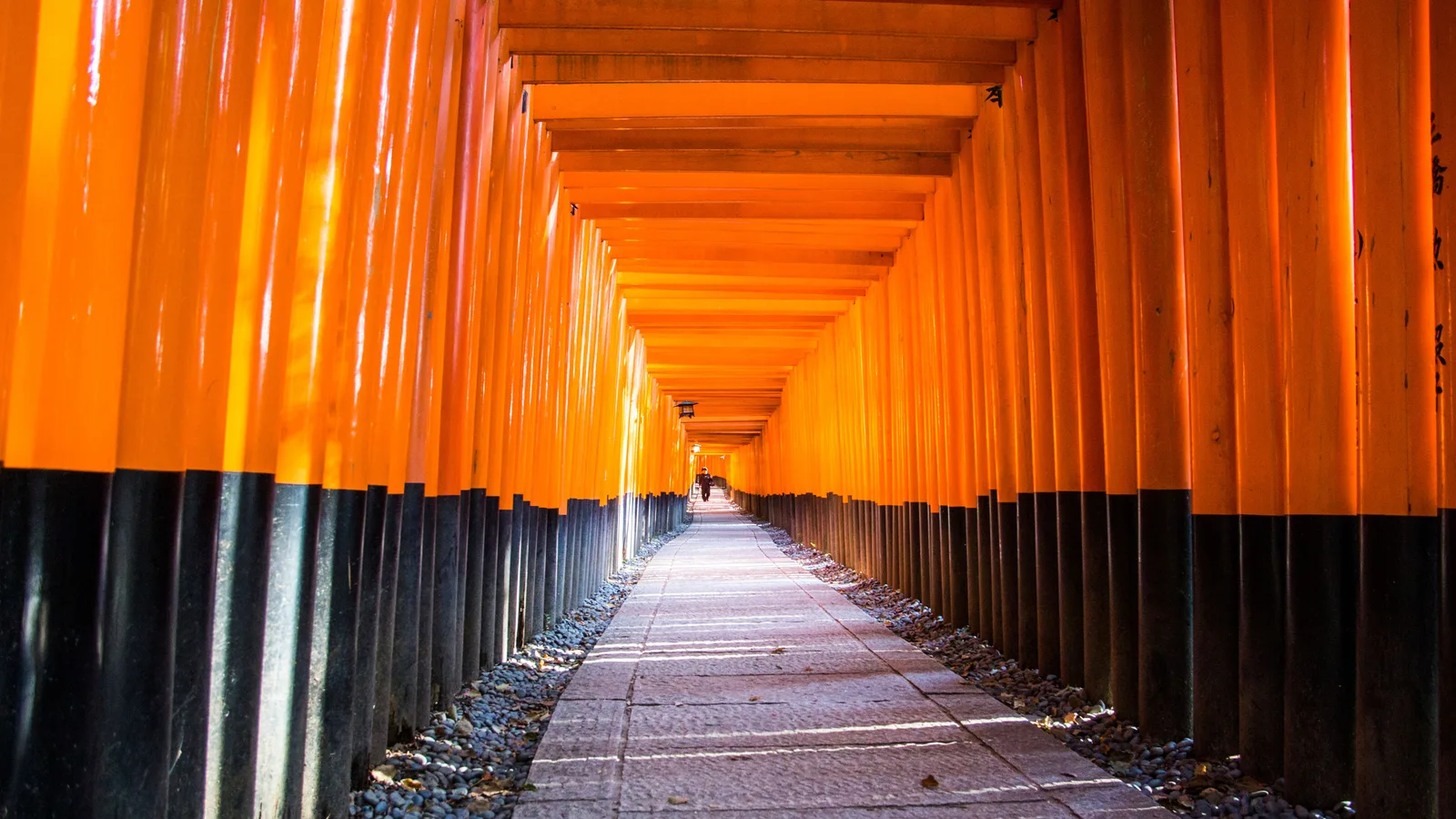
Kyoto is where the postcard Japan actually exists: the vermilion torii tunnels of Fushimi Inari, the gold-leaf Kinkaku-ji mirrored in its pond, the Arashiyama bamboo grove and the wooden machiya townhouses of Gion. It rewards walking, and the best of it — the Philosopher's Path, the temple gardens of Higashiyama — costs nothing but time.
Base yourself near Kyoto Station or in Gion and use buses sparingly, because they jam solid in high season. The city is at its most magical before 9am, when the tour groups are still at breakfast.
Why it works
- A density of temples, shrines and gardens found nowhere else in Japan
- Atmospheric old districts that are worth wandering after dark
- Quick connections to Osaka and Nara
- Early mornings are genuinely quiet, even in peak season
What to weigh up
- Kyoto is inland and has no cruise port; you reach it from Kobe or Osaka
- Buses and headline sights are packed in spring and autumn
- Hotel prices jump around blossom and foliage season
Best for food and nightlife
Osaka
Osaka is the counterweight to Kyoto's calm: the canal of signs at Dotonbori, the Kuromon Ichiba market, kushikatsu in Shinsekai, okonomiyaki and takoyaki on every corner, and a nightlife that runs later than anywhere else on this list. Osaka Castle and the open-air deck of the Umeda Sky Building cover the sightseeing, and Universal Studios Japan handles the theme-park day.
Its real advantage is position. Kyoto is about 15 minutes away by shinkansen and Nara roughly 45 minutes by train, which makes Osaka an excellent — and often cheaper — base for the region. Two nights is enough for the city itself.
Why it works
- The best eating on this list, from market stalls to sit-down restaurants
- Far livelier nightlife than Kyoto or Kanazawa
- Superb transport links to Kyoto, Nara and Kobe
- Hotel rooms often cost less than equivalent Kyoto rooms
What to weigh up
- Fewer must-see traditional sights than Kyoto or Kanazawa
- Can feel loud and scruffy if you are after calm
- Weekend hotel rates rise sharply
Best for history and island scenery
Hiroshima and Miyajima
This is the pairing that surprises people. Hiroshima's Peace Memorial Park and Museum, with the A-Bomb Dome across the river, is the most moving couple of hours you will spend in Japan, and it sits a short tram ride from a city that is otherwise a relaxed, friendly place to eat okonomiyaki. A train and a short ferry ride away, Miyajima's Itsukushima Shrine has a great torii that appears to float at high tide, and a ropeway climbs Mount Misen for views over the Seto Inland Sea.
Give it two nights: one for the city, one for the island. Hiroshima is around four hours from Tokyo by shinkansen and roughly 90 minutes from Osaka.
Why it works
- Combines a site of real historical weight with genuinely beautiful island scenery
- Miyajima is a highlight in its own right, especially around high tide
- Hiroshima is a regular cruise port, so it slots neatly into a sea itinerary
- Far less crowded than Kyoto for comparable quality of sights
What to weigh up
- The subject matter is sombre and not for every traveller
- Four hours each way from Tokyo makes it a trip-extender, not a day trip
- Miyajima gets very busy at weekends and during autumn colour
Best for gardens and a slower pace
Kanazawa
Kanazawa is the one to choose if you want the beauty of Kyoto without the crush. Kenroku-en is counted among Japan's finest gardens, the castle grounds sit next door, and the Higashi Chaya district's wooden teahouses and gold-leaf workshops are a short bus ride away. Add the seafood at Omicho market and the 21st Century Museum of Contemporary Art and you have two very good days.
The Hokuriku Shinkansen puts Kanazawa about two and a half hours from Tokyo, which makes it a natural stop en route west or a springboard to Takayama and Shirakawa-go.
Why it works
- Kenroku-en garden plus a compact, walkable sightseeing core
- A fraction of Kyoto's crowds
- Direct shinkansen from Tokyo
- Strong local craft and food scene, from gold leaf to sushi
What to weigh up
- Fewer headline sights than Tokyo, Kyoto or Osaka
- Winters on the Sea of Japan coast are wet and snowy
- Very quiet at night compared with Osaka
How to choose where to go in Japan
- Start with the calendar, not the map. Cherry blossom and autumn colour move hotel prices and crowds more than anything else. If your dates are fixed by school holidays, build the itinerary around what that season does well.
- Count nights, not days. Two nights in Kyoto gives you one full day. Every hotel change costs half a day in packing, stations and check-in, so three bases in a week is usually one too many.
- Think about your arrival and departure points. Flying into Tokyo and home from Osaka (or the reverse) removes a wasted return journey and usually costs little more than a return ticket.
- Match the pace to the place. Tokyo is go-go; Kanazawa is not. Alternating a big city with a smaller one keeps a two-week trip from blurring into a memory of train seats.
- Decide what you will skip, on purpose. Nara's deer park, Hakone's views of Mount Fuji and Nikko's shrines are all excellent and all easy to bolt on — but not all in the same week.
- Consider how you arrive. If you are sailing in, port timetables rather than train timetables shape the trip; if you are flying, the shinkansen does the rest.
When to go: how the seasons change the answer
Japan's seasons are the single biggest variable in choosing where to go.
Late March to mid-April is cherry blossom season. The bloom moves north through the country and the exact dates shift each year, so treat forecasts as a rough guide. Expect the highest prices and the biggest crowds in Kyoto and Tokyo.
Late April to early May is Golden Week, when domestic travel peaks. Trains and popular hotels fill weeks ahead.
June to mid-July is the rainy season across most of the country: humid, wet and quieter, with cheaper rooms. Gardens and moss-covered temples look wonderful in the rain.
Late July and August are hot and sticky, and the typhoon season runs roughly from August into September. Kanazawa and Kyoto can be uncomfortably warm; Hokkaido is the sensible escape.
October and November bring autumn colour and mild air, and are the best all-round window alongside spring.
Winter means cold, snowy weather on the Sea of Japan coast — atmospheric in Kanazawa, less so if you are packing light — and crisp, dry, sunny days in Tokyo, which suits city sightseeing and museums.
Arriving by sea: ports, day trips and what to expect
If you are seeing Japan as part of a cruise, the list of places changes shape. You get one day per port and the ship decides how far you can roam, so the question becomes not where is best but what is realistically reachable before all aboard.
Three things catch people out. Kyoto is inland and has no cruise terminal, so a Kyoto port call usually means docking at Kobe or Osaka and taking a train. Hiroshima is genuinely convenient, with the Peace Memorial Park a short tram or bus ride from the port area and Miyajima a train-and-ferry hop beyond it. And Kanazawa's terminal sits outside the city, so a shuttle or local bus is part of the day.
- Yokohama (for Tokyo)
- Tokyo's main cruise terminal; around half an hour by train into the centre of Tokyo
- Kobe and Osaka (for Kyoto)
- Kyoto is roughly an hour away by train, so a port day there is long but workable
- Hiroshima
- Peace Memorial Park is a short tram or bus ride from the port; Miyajima needs a train and ferry on top
- Kanazawa
- Terminal is outside the city; Kenroku-en and the old tea districts fit into a day by shuttle or bus
The verdict
Frequently asked questions
How far is Kyoto from Tokyo?
Roughly two hours 15 minutes by the fastest shinkansen service, and a little under three hours on the services usually covered by a Japan Rail Pass. Trains leave every few minutes, so it is an easy hop rather than a journey to plan around.
Is a Japan Rail Pass worth it for a week?
Since the price rise, a national pass pays off mainly on trips with several long shinkansen journeys. Compare the pass against individual tickets for your exact route first — regional passes are often better value for a single corridor such as Tokyo to Kanazawa, or Osaka to Hiroshima.
Is Hiroshima worth it on a short trip?
It is around four hours from Tokyo by shinkansen, so it suits a trip of a week or more, or a stop on the way west between Osaka and Kyushu rather than a day trip. Two nights covers the city and Miyajima comfortably.
Can I use cards in Japan, or do I need cash?
Cards are widely accepted in hotels, department stores and larger restaurants, but smaller eateries, markets and shrine stalls often prefer cash. Carry some yen and top up at convenience-store cash machines rather than relying on your bank card everywhere.
Kanazawa or Kyoto — which should I choose?
Kyoto has far more temples, shrines and historic districts, and it is easier to reach from Osaka. Kanazawa is smaller, calmer and easier to see in two days, with one outstanding garden and a strong craft scene. It suits a second trip or anyone who finds crowds exhausting.
Related articles

The Best Family Cruise Holidays: 5 Picks for UK Families
Five family cruises that work for British parents, from no-fly P&O sailings to Disney magic and Royal Caribbean's big-ship waterparks.
The Best Destinations to Visit in July: 5 Picks for UK Cruisers
Five July cruise destinations compared for British travellers — the fjords, Alaska, the Baltic, Iceland and Greece — with picks by weather and wildlife.
Best Destinations to Go in February: 5 Picks for UK Travellers
From Tenerife's reliable winter sun to the Northern Lights in Tromsø, these are the five best February destinations for UK travellers, compared.