Best Places to Travel in Thailand: 5 Picks for Every Kind of Trip
From Bangkok's temples to Krabi's limestone coast: five places to travel in Thailand, how they compare, when to go and how to choose between them.
The quick answer: which part of Thailand suits you
Thailand is not one holiday. Bangkok is a sprawling, hot, brilliant city; the north around Chiang Mai is mountains, temples and markets; the Andaman coast is limestone cliffs and clear water; and the Gulf islands run to their own weather. The best place for you depends on how long you have, what time of year you are travelling and whether you want to be busy or horizontal.
As a rule of thumb: first trip, 10 to 14 days — Bangkok plus one Andaman base. Culture over beaches — Chiang Mai and the north. Beach holiday with no thinking — Phuket. Quiet beach with a scooter — Koh Lanta. Scenery and climbing — Krabi and Railay.
The five best places to travel in Thailand
Best for a first trip
Bangkok
Bangkok is the version of Thailand most people picture before they arrive, and it still delivers: gilded temples along the Chao Phraya, a canal boat network that doubles as public transport, and street food from breakfast until late.
The historic core around Wat Pho and the Grand Palace is walkable in a morning, while Sukhumvit and Silom handle shopping, rooftop bars and the city's most ambitious restaurants. It works as a two- or three-night bookend to a wider trip because the airports connect to everywhere else in the country. Stay near a BTS Skytrain or MRT station and the heat and traffic stop being a problem.
What it does well
- Unbeatable food, from market stalls to fine dining
- The best transport links in the country for onward travel
- Big-hitting temples and palaces within walking distance of each other
- Works in any season, with plenty to do when it rains
What to watch
- Hot, noisy and exhausting if you try to do too much in a day
- Taxi and tuk-tuk scams cluster around the main tourist sights
- No beach — you will need a second stop for the sea
Best for culture and cool mornings
Chiang Mai
Chiang Mai is the north's cultural capital: a moated old city packed with temples, the mountain temple of Doi Suthep above it, and a craft and café scene that has long outgrown its backpacker roots. November to February is genuinely cool in the mornings, which makes it the most comfortable city in Thailand for walking.
It suits travellers who would rather do markets, cooking courses and day trips into hill country than lie on sand. The surrounding valleys, Doi Inthanon and the road north to Pai are where the region earns its reputation.
What it does well
- Temples, markets and cooking schools in a compact old city
- Cooler, greener setting than the southern cities
- Excellent base for national parks and hill-country day trips
- Far calmer than Bangkok, with a walkable centre
What to watch
- Smoke haze in the burning season, roughly late February into April
- No coastline — the sea is a flight away
- The old city gets busy with tour groups in high season
Best for scenery and island-hopping
Krabi and Railay
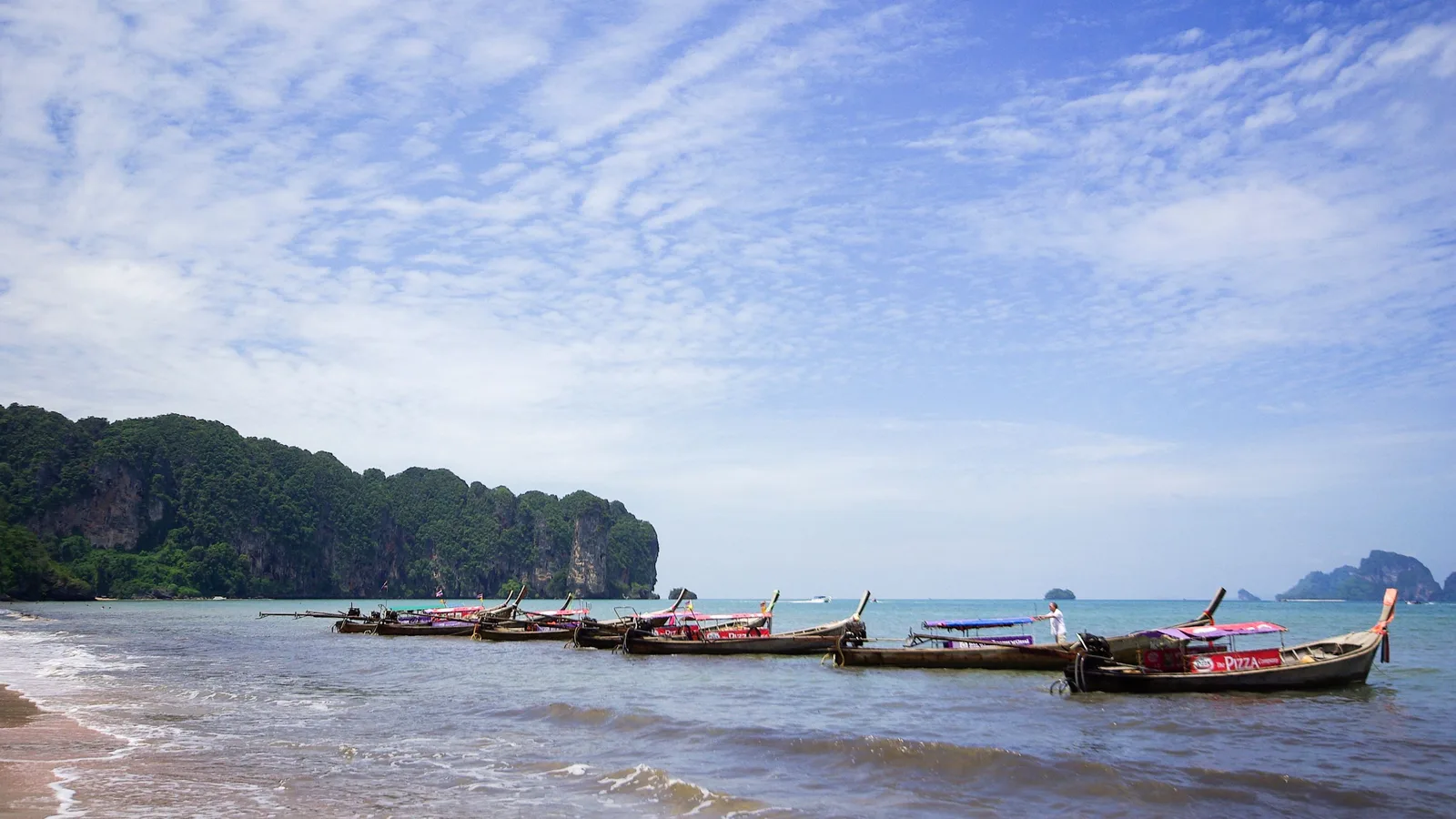
Krabi province is where the postcards come from: limestone karsts rising out of green water, hidden lagoons and beaches reached only by longtail boat. Railay is the famous one, split into east and west beaches with climbing routes on the cliffs above; Ao Nang is the practical base, with boats leaving from the beach and a strip of restaurants behind it.
Come here to be active in the morning and horizontal in the afternoon — island-hopping to the Phi Phi group and the Hong Islands, kayaking through mangroves, or climbing. It also works as a stopover between Phuket and Koh Lanta.
What it does well
- The most dramatic scenery in southern Thailand
- Longtail boats to islands and beaches straight from the shore
- World-class rock climbing and good kayaking
- A mix of quiet beaches and a lively, useful base at Ao Nang
What to watch
- Railay has no roads, so bags get carried and dragged
- Heaving with day trippers in high season
- Boat trips get cancelled when the monsoon kicks up
Best for a quiet beach stay
Koh Lanta
Koh Lanta is the long, laid-back island south of Krabi, where the west coast is a string of beaches that rarely feel crowded and the sunset is the main event of the day. Long Beach and Klong Nin are the popular stretches, lined with bungalows and beach bars rather than high-rise hotels.
There is enough to do when you want it — diving and snorkelling trips to Koh Rok and Koh Haa, the national park at the southern tip, and a small old town of stilt houses on the east coast — but nothing pushes you into it. Families and couples tend to settle in for longer than they planned.
What it does well
- Quiet beaches with room to yourself, even in high season
- Good diving and snorkelling day trips from the west coast
- Relaxed, family-friendly pace with low-rise places to stay
- Easy to combine with Krabi or Trang by boat and minibus
What to watch
- Takes a ferry plus a road transfer to reach
- Very limited nightlife — this is not a party island
- Some beaches are rocky or shallow at low tide
Best for an easy resort holiday
Phuket
Phuket is the biggest island and the easiest place in the south to do a beach holiday without thinking about it: an international airport, a huge range of places to stay, and beaches from the busy sweep of Patong to quieter stretches at Kata Noi and Nai Harn. Phuket Old Town is a genuinely good half-day, with Sino-Portuguese shophouses and a strong food scene.
It is the right choice if you want a resort, a spa and a pool, or if you are travelling with people who want different things from a holiday. It is the wrong choice if you want to feel you have found somewhere undiscovered.
What it does well
- Direct flights and the widest choice of accommodation in the south
- Beaches to suit every mood, from lively to near-empty
- Good base for boat trips to Phi Phi, Phang Nga Bay and the Similans
- Old Town adds culture and food beyond the sand
What to watch
- Patong is loud, commercial and not to everyone's taste
- Traffic is heavy and getting around the island adds up
- The main beaches have lost much of their original character
Side by side: how the five compare
| Place | Best for | Feel | Minimum time | Best months |
|---|---|---|---|---|
| Bangkok | First trip, food, temples | Big, hot, relentless, brilliant | 2–3 nights | November to February |
| Chiang Mai | Culture, markets, hill country | Laid-back city under a mountain | 3–4 nights | November to February |
| Krabi and Railay | Scenery, island-hopping, climbing | Dramatic, and busy with it | 4–5 nights | November to April |
| Koh Lanta | A quiet beach stay | Slow, sandy, family-friendly | 5–7 nights | November to April |
| Phuket | An easy resort holiday | Polished, varied, well connected | 5–7 nights | November to April |
How to choose where to go
Start with the calendar, not the map. The Andaman coast — Phuket, Krabi, Koh Lanta — is at its best from November to April. The Gulf islands, including Koh Samui, have their wettest weather roughly October to December. Bangkok and Chiang Mai can be visited any month, with heat and, in the north, smoke haze from late February to weigh up.
Then count your days. A week means one place with a short transfer. Ten days is city plus coast. A fortnight lets you add the north or a second island without living out of a suitcase.
Think about who is going. Families often do better on Phuket, with direct flights, resorts and shallow beaches; couples and solo travellers get more out of Krabi, Koh Lanta or the north.
Decide how you want to move. Scooters, longtail boats and overnight trains are part of the appeal for some and a source of stress for others. If you would rather not drive abroad, base yourself somewhere with boats and transfers on the doorstep.
When to go, region by region
- November to February
- The most reliable window for most of the country: dry, less humid and cooler in the north. It is also the busiest, so book well ahead.
- March to May
- Hot and hazy, especially in the north. The Andaman coast often stays calm into April, which makes it a workable beach trip with fewer people around.
- June to October
- Southwest monsoon on the Andaman coast: greener landscapes, fewer people and reduced boat services. Bangkok and the north see short, heavy afternoon showers.
- October to December
- The wettest stretch for Koh Samui and the Gulf islands, while the Andaman coast starts to dry out.
- Any month
- Bangkok and Chiang Mai can be visited year-round; plan around the heat and, in the north, the smoky season.
In practice the shoulder weeks either side of the high season are the sweet spot: mostly good weather, thinner crowds and boats still running. If your dates are fixed by school holidays or a cruise, choose the coast that matches the month rather than forcing the one you had your heart set on.
Getting between the five
Bangkok is the hub. Suvarnabhumi and Don Mueang both handle domestic routes, with short flights to Chiang Mai, Phuket, Krabi and Surat Thani. Overnight sleeper trains run from Bangkok to Chiang Mai and south towards the islands; if you can sleep on a train, they save a night's accommodation and a day of travel at once.
From Krabi, boats and minibuses connect Ao Nang, Railay and Koh Lanta, and Phuket has its own airport plus road links up to Phang Nga Bay. Ferries are weather-dependent, and schedules thin out in the low season — check the last crossing of the day before you commit to a hotel.
Worth adding if you have longer
- Ayutthaya — the ruined former capital, an easy train ride from Bangkok as a day trip or an overnight.
- Kanchanaburi — the River Kwai bridge, war cemeteries and waterfalls in the western hills.
- Sukhothai — the best-preserved ancient city in Thailand, usually paired with Chiang Mai.
- Khao Sok National Park — rainforest and a lake studded with limestone karsts, between Surat Thani and Phuket.
- Koh Samui — a Gulf island with its own airport and a different season from the Andaman coast.
- Pai — a mountain town north of Chiang Mai, popular with people who come for three nights and stay for ten.
Combining Thailand with a cruise
Several cruise lines include Thai ports on Asia itineraries. Laem Chabang is the port for Bangkok, a long road transfer from the city, so a port day there works best as one focused destination — the Grand Palace and Wat Pho, or a food tour — rather than a dash around the whole city. Phuket and Koh Samui appear frequently, with beaches and boat trips close to the landing point, and Krabi turns up on some itineraries.
If you are sailing rather than flying, treat the ship as your transport and add two or three nights on land at either end. It is an efficient way to see several Andaman highlights without repacking, and it leaves you free to go back to the one you liked.
The verdict
Thailand travel questions, answered
How many days do you need in Thailand?
Ten days is enough for two places, such as Bangkok and Krabi. A fortnight lets you add Chiang Mai or a second island without spending every other day in transit. Under a week, stay in one region.
Phuket or Krabi — which should you choose?
Phuket for direct flights, resorts and a wide choice of places to stay. Krabi for the scenery, the climbing and a smaller base at Ao Nang. Phuket is easier with children; Krabi feels less developed.
Which part of Thailand has the best beaches?
The Andaman coast — Krabi, Koh Lanta, the Phi Phi islands and Phuket's west coast — has the clearest water and the limestone scenery. The Gulf islands are lovely but follow a different weather pattern.
Can you visit Thailand in the rainy season?
Yes. Rain usually arrives in short, heavy bursts rather than lasting all day, and the Andaman coast is often fine in the shoulder months. Boat trips are the main thing that gets cancelled.
Do you need a visa for Thailand from the UK?
Entry rules and permitted stay lengths change, so check the latest guidance from the Thai embassy and the FCDO travel advice before you book. Make sure your passport has plenty of validity left.
Related articles

The Best Family Cruise Holidays: 5 Picks for UK Families
Five family cruises that work for British parents, from no-fly P&O sailings to Disney magic and Royal Caribbean's big-ship waterparks.

The Best Destinations to Visit in July: 5 Picks for UK Cruisers
Five July cruise destinations compared for British travellers — the fjords, Alaska, the Baltic, Iceland and Greece — with picks by weather and wildlife.
Best Destinations to Go in February: 5 Picks for UK Travellers
From Tenerife's reliable winter sun to the Northern Lights in Tromsø, these are the five best February destinations for UK travellers, compared.